Studying at an Italian University.
What It’s Really Like to Study at an Italian University (Nobody Warns You).
My first oral exam in Italy lasted four minutes. The professor asked a question, I froze for maybe two seconds too long, and he moved on to the next student. No do-overs, no time to collect my thoughts on paper first. Just a question, a number between 18 and 30, and my libretto one entry heavier.
Twelve years later, I still remember that exact feeling, because nothing in my economics textbook back in Belarus had prepared me for it. If you are thinking about university in Italy, or you are already enrolled and wondering why everything feels slightly different from what you expected, here is what I actually learned, one semester at a time.
Contents
The 12 years you need before you even apply.
Before any of the fun (or the panic) starts, there is a number that decides whether you can enroll at all: 12 years of secondary education. This comes straight from how the Italian school system, the Sistema educativo di istruzione e formazione, is structured under MIUR, Italy’s Ministry of Education.
In practice, this means one of two things when you apply. Either you already hold a diploma that adds up to 12 years of schooling and a certain number of credits, or you don’t quite reach 12 years on paper, and the university asks for something extra: a certificate from your home university confirming you are already enrolled in your first, second, or third year there. The logic is simple even if it isn’t obvious at first. Italy wants proof of 11 plus 1, meaning eleven years of school plus at least one year of higher education, before it lets you start from scratch in an Italian program.
I didn’t know this rule existed until I was already deep into gathering documents for UNIVPM in Ancona. If you are at the research stage right now, please check this first, because it changes what paperwork you need to request and how far in advance.
Here are some useful posts to learn more about the process of entering an Italian university and the documents you need:
A day of lectures, Italian style.
Once you are in, the rhythm of a normal week is more relaxed than people expect. Classes usually run 45 to 90 minutes each, and a full teaching day is somewhere between three and five hours, Monday through Friday. That leaves real space for studying on your own, working a part-time job, or just wandering around the city, which is exactly what I did in my first year in Ancona.
Attendance is not compulsory for most bachelor’s and master’s courses. Exams are built around textbooks and lecture notes rather than a register of who showed up, so plenty of students prepare mostly from books. I always went anyway, because sitting in the room made the material stick in a way that reading alone never did for me, but nobody will chase you down if you skip a week.
The academic calendar has its own logic too. Semesters start in September or October and again in February or March. Christmas break runs two to three weeks, Easter gives you about a week, and summer clears out July and August almost entirely. Add the national holidays scattered through the year, and you get a calendar built for actual breathing room, not just survival between deadlines. Some of my classmates used those breaks for university-organized visits to places like the Lardini factory in Filottrano or Guzzini in Recanati, which is a very Italian way of turning a school trip into an excuse to eat well.
The textbook bill that nobody warns you about.
Here is where the romance fades a little. University textbooks in Italy are genuinely expensive, and the exam is built directly on top of them, sometimes one book, sometimes two or three depending on how many credits the course is worth.
When I was choosing my courses for Economia Aziendale, I looked up what my professor recommended for the syllabus. Two textbooks. I checked their prices online, and the total made me sit down for a second, because Italian students spend on average more than 1,000 euros a year on specialized textbooks and course materials, and prices have climbed roughly 5 percent since last year alone due to paper and printing costs.
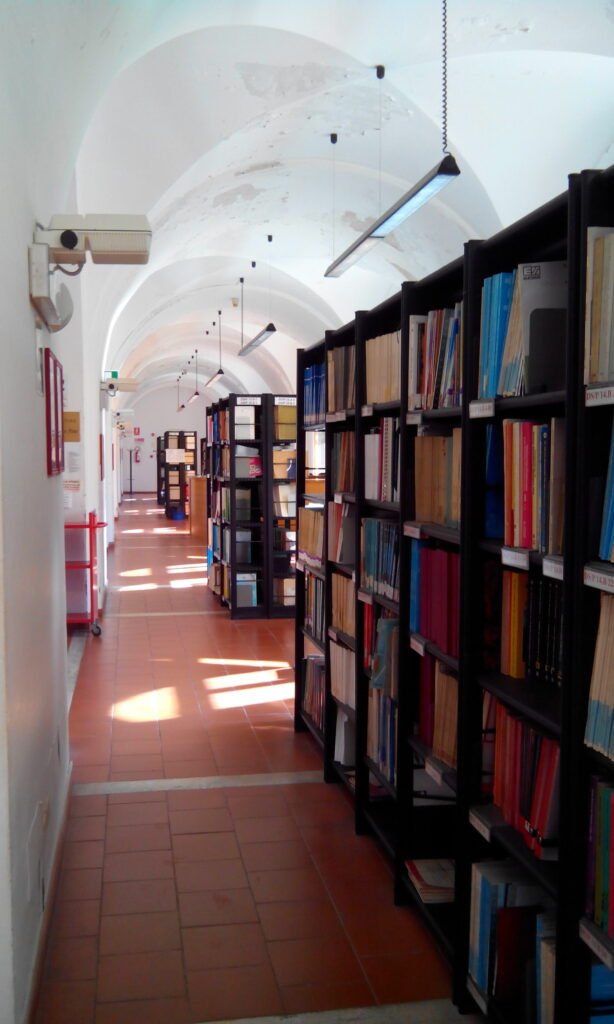
There are ways around the full price tag, and almost every student uses at least one of them. University libraries lend books for free, though the rules differ by school. Some allow 25 books for 30 days, others cap it at 10 for 20 days, depending on the university and your student category. Used books through sites like Libraccio can cut the cost close to half. And then there is the classic move: photocopying. Italian law allows you to copy up to 15 percent of a book for personal use through an authorized copy shop that pays royalties back to the publisher. Go over that limit, and you are technically committing an offense with fines up to 2,065 euros, so this is not the moment to photocopy an entire textbook cover to cover.
My honest advice, the one I wish someone had given me before my first semester: go to the library in week one, ask older students if they still have last year’s edition, and only buy new if you truly have no other option.
La sessione: six weeks that decide everything.
If there is one phrase that made my stomach drop every single time, it’s la sessione. Depending on your faculty, you might have two, three, or even four exam windows a year: winter, summer, autumn, and sometimes spring, though not every session applies to every student. Once you add it all up, most faculties give you around 12 chances a year to sit an exam, split into sessions that each last about a month and a half, further divided into two or three appelli spaced one to two weeks apart.
Exams come in three flavors: written, oral, or a mix where a written test earns you the right to move on to an oral one. The oral exam was, without question, the hardest part of my entire Italian education. There is no time to think through your answer on paper first. The professor asks something, and you answer on the spot, out loud, in front of them and sometimes in front of other students waiting their turn.
Every grade, from 18 up to 30, lands in your libretto, the small booklet that becomes a running record of your entire university career. My best strategy, learned the hard way after a rough first session, was to review my notes and the matching textbook chapter every single time I got home from a lecture. By the time the session actually arrived, I wasn’t learning the material for the first time; I was just polishing it. That single habit changed my results more than anything else I tried.
By https://www.econ.univpm.it/content/calendari-esami-di-profitto
La bacheca: campus life before Instagram.
Not everything about Italian university life is stressful. Somewhere on every campus there is a bacheca, a bulletin board covered in half-peeling tape, and it is genuinely one of my favorite small details of student life here.
On any given day you might find a roommate looking for someone who “doesn’t snore, mostly,” flyers for an Erasmus party promising free beer until 3 am if you bring ID, a petition about cafeteria prices, or a request for anatomy thesis models. It’s where people sell old bikes, used books, or sometimes an entire motorino before graduation. Somebody always claims to have a free PDF of the assigned textbook, and it is always, without fail, just the table of contents.
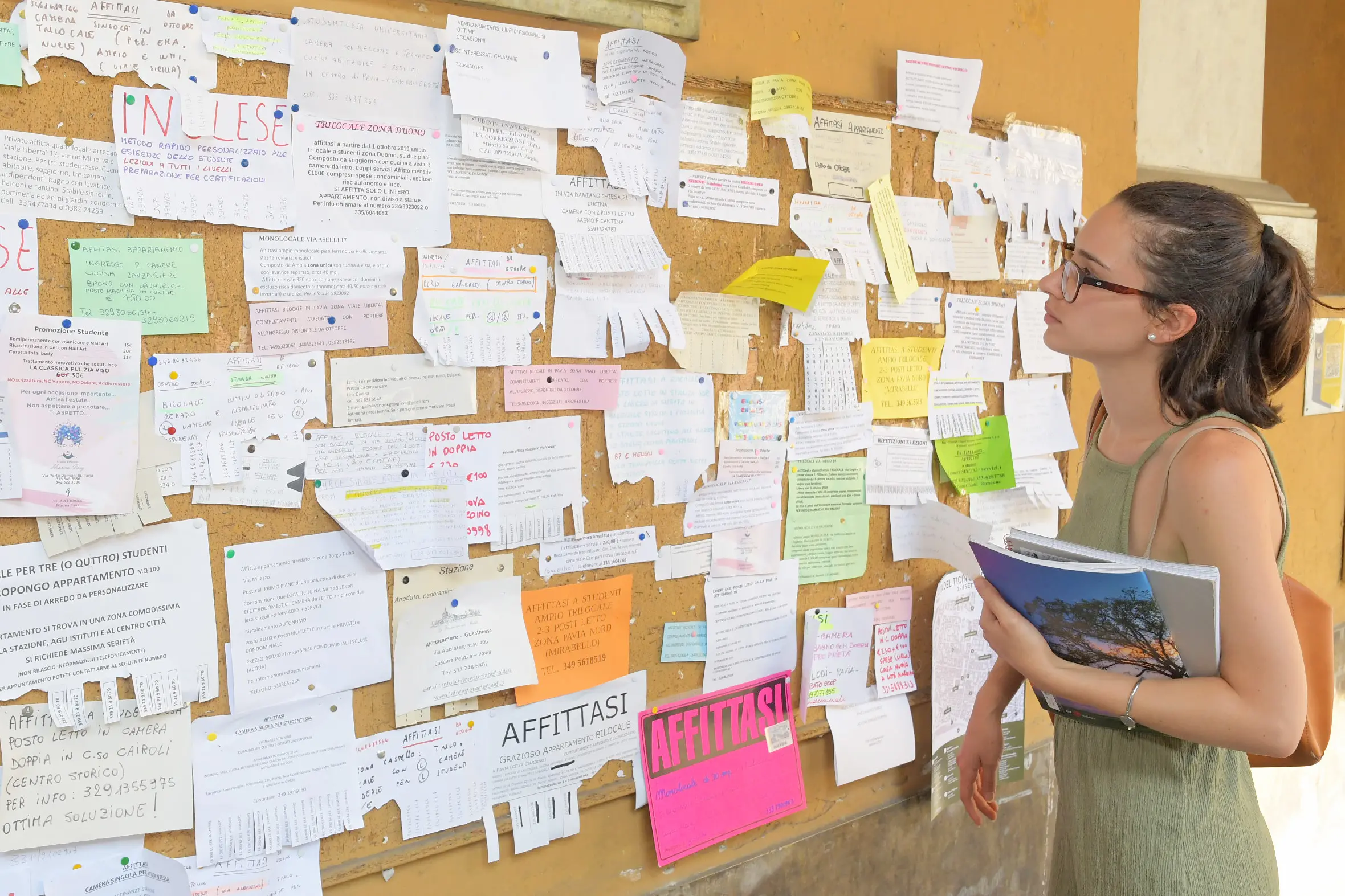
It sounds small, but the bacheca was where I found my first apartment tip in Ancona, and where I learned that half of surviving university here isn’t about the lectures at all. It’s about paying attention to the community around you, one taped-up flyer at a time.
If you are getting ready for your own move to study in Italy, the paperwork and the textbook prices are worth planning around early. The oral exams and the bacheca culture, though, those you just have to live to understand.
Ci vediamo in aula. Ciao!