Master’s degree in Italy.
How to Get Into a Master’s Degree in Italy (The Real Version).
Ciao! Come state?
Five years before I ever wrote a single word on this blog, I was sitting in a student apartment in Ancona, refreshing the UNIVPM enrollment page for the tenth time, convinced I had filled in the wrong field somewhere. Applying for my laurea magistrale felt like assembling furniture without instructions. In Italian. Under a deadline.
So if you’re standing where I stood, trying to figure out how to get into a master’s degree in Italy, ti capisco, I’ve done this twice, once for my triennale and once for my magistrale, both in Economics at UNIVPM, both with a DSU scholarship that covered my tuition and then some. Let me walk you through what actually happens, not the polished brochure version.
Contents
- Why a Master’s Degree in Italy Is Worth the Paperwork
- Step 1: Choose Your Program (and Be Honest About It)
- Step 2: Learn the Deadlines Before They Learn You
- Step 3: Scholarships, Because Yes, You Can Study Almost for Free
- Step 4: Language Certificates, Because Paperwork Loves Acronyms
- Step 5: The Documents That Decide Everything
- Step 6: Money, Visas, and the Actual Cost of Living
- EU vs Non-EU: What Actually Changes
- What I’d Tell Myself in 2017
Why a Master’s Degree in Italy Is Worth the Paperwork
Italian universities are cheap by international standards. Tuition usually sits between 1,000 and 4,000 euros a year, and it drops further if your ISEE (the Italian income indicator) or a DSU scholarship applies. Compare that to a master’s in the UK or the US, and Italy starts looking less like a compromise and more like a smart choice.
Add to that the Bologna Process, which means your foreign credits translate into something Italian universities recognize, and a growing number of programs taught entirely in English in Milan, Bologna, Turin, and beyond. You don’t need to already speak Italian to start.
That said, I won’t pretend the process is smooth. It isn’t. It’s doable, though, and that’s a different thing.
Step 1: Choose Your Program (and Be Honest About It)
Before deadlines, before documents, decide what you actually want to study and where.
Ask yourself two questions. What subject do you want for three semesters of your life? And does it match your bachelor’s degree closely enough that admissions won’t reject you on a technicality?
A literature graduate applying to engineering is going to have a hard time, whatever the program looks like on paper. Universities check for coursework overlap, not just enthusiasm.
Look at the city too. Milan for economics and design. Bologna for almost everything; it’s the oldest university in the Western world. Turin and Milan for engineering and automotive. Rome’s Sapienza and Naples for pretty much anything, given its size. Each city has its own rhythm, and you’ll be living there, not just studying there.
Step 2: Learn the Deadlines Before They Learn You
This is where most applications fall apart, not because people aren’t qualified, but because they miss a date.
Deadlines vary wildly by university and are set each year independently. As a rough picture for 2026:
- Politecnico di Milano: January to February
- Università di Padova: March
- Sapienza Roma: April to May
- Università di Bologna: rolling admissions for open access programs from July, with earlier windows (often January to May) for restricted access courses
- Università di Firenze: open access enrollment usually opens July 1st, while numero programmato courses (Psychology, Design, health professions and more) run entrance tests on their own calendar between spring and late summer
- Politecnico di Torino: applications typically open in February, with several rounds running through the summer
- Università Federico II di Napoli: varies heavily by department, generally spring through early autumn
Those months shift every year and every course, so treat this as a starting point, not gospel. Bologna, in particular, runs two very different timelines depending on whether your program is ad accesso libero (open) or a numero programmato (restricted, entrance test required). Always check the specific call for applications (bando) on the university’s own website before you plan around anything.
If you’re a non-EU citizen, add extra time for the Dichiarazione di Valore, the Declaration of Value your home country’s Italian consulate or CIMEA issues to certify your existing degree. This step alone can take weeks. Start the whole process at least twelve months before your intended start date. I know that sounds excessive. It isn’t.
Step 3: Scholarships, Because Yes, You Can Study Almost for Free
This is the part nobody tells you loudly enough, so I will.
DSU (Diritto allo Studio Universitario) is regional and based purely on your ISEE, your financial situation, not your grades. It can cover up to 100% of your tuition and, depending on the region, include a stipend of 5,000 to 7,000 euros a year. This is the scholarship that got me through both my degrees. Apply for it even if you think your income is “too high.” Many international students underestimate their chances because the cost of living back home is lower, and DSU accounts for that.
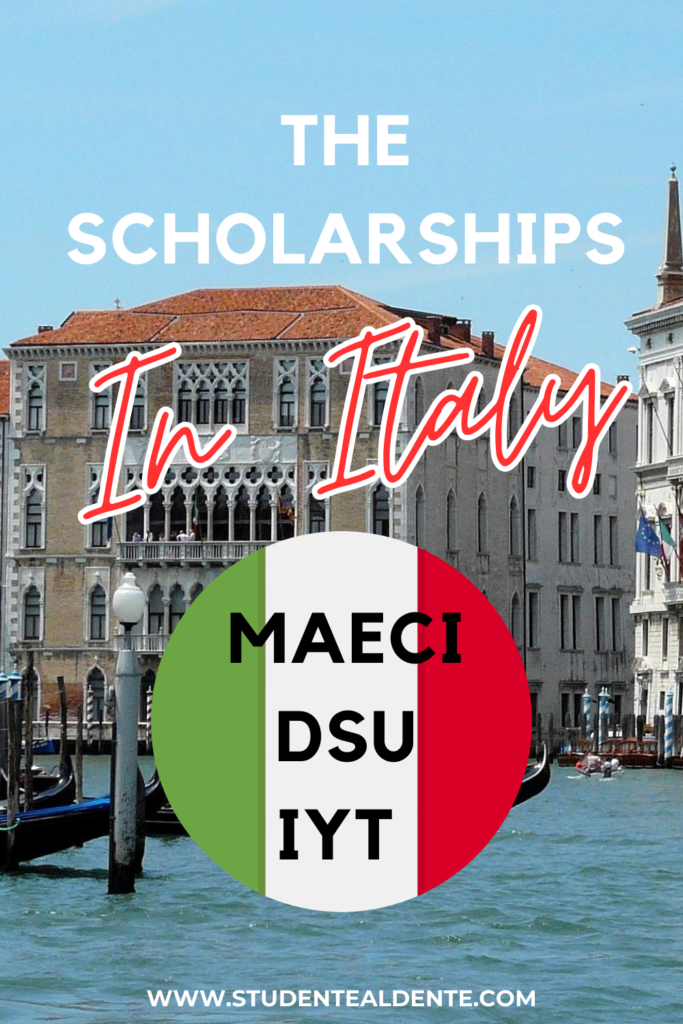
MAECI and Invest Your Talent (IYT) are merit-based and specifically built for master’s students. They’re more competitive, but they cover real money if you get them.
Internal university scholarships exist too, separate from DSU, and each Ateneo publishes its own bando. Check the portal of whichever university you’re applying to.
My honest advice? Apply to all of them. I’ve watched students win DSU purely because the numbers worked in their favor, even when they assumed they wouldn’t qualify.
Step 4: Language Certificates, Because Paperwork Loves Acronyms
Depending on your program’s language of instruction, you’ll need proof of proficiency.
- CILS or CELI, B1 to C1, for programs taught in Italian
- TOEFL or IELTS for programs taught in English
- GMAT or GRE, mostly for business and STEM master’s degrees (particularly for Master’s, Master of Science, and MBA programs in economics, finance, or management (such as at Bocconi University or Luiss Guido Carli)
Start these six to twelve months before you apply, not six weeks. Duolingo streaks are nice, but they won’t get you a certified score.
Step 5: The Documents That Decide Everything
This is the unglamorous part, and it’s where applications actually get rejected. Not because someone wasn’t smart enough, but because a translation wasn’t notarized.
You’ll typically need:
- Your bachelor’s degree and full transcript
- Sworn (notarized) translations of both, if they’re not already in Italian or English
- A CV and motivation letter, plus a portfolio if you’re applying to art or design programs
- Passport and proof of funds for your visa, generally a minimum of around 6,000 euros a year, though this figure moves, so verify it against the current bando
Some universities also want your GPA converted to the Italian 110-point scale, or letters of recommendation. It’s never listed the same way twice, which is exactly why you check the specific call for your specific university instead of trusting a generic guide, including this one.
Step 6: Money, Visas, and the Actual Cost of Living
Even with a scholarship, build a financial cushion before you arrive. Things go wrong. Landlords ask for deposits you didn’t budget for. Trains get cancelled the week you need to register somewhere.
For a Visa D (the study visa for non-EU students), you’ll need to demonstrate at least 10,000 euros available, either in savings or through a scholarship letter. The monthly cost of living across most Italian university cities runs 800 to 1,200 euros, rent and food included, though Milan will push that higher and smaller cities like Ancona or Padova will sit lower.
So, How Much Does It Cost to Study in Italy?

EU vs Non-EU: What Actually Changes
If you’re an EU citizen, your path is simpler. No visa, no Declaration of Value, no permesso di soggiorno to chase down after arrival. You’ll still need the academic documents, and the deadlines still apply, but the bureaucratic layer is thinner.
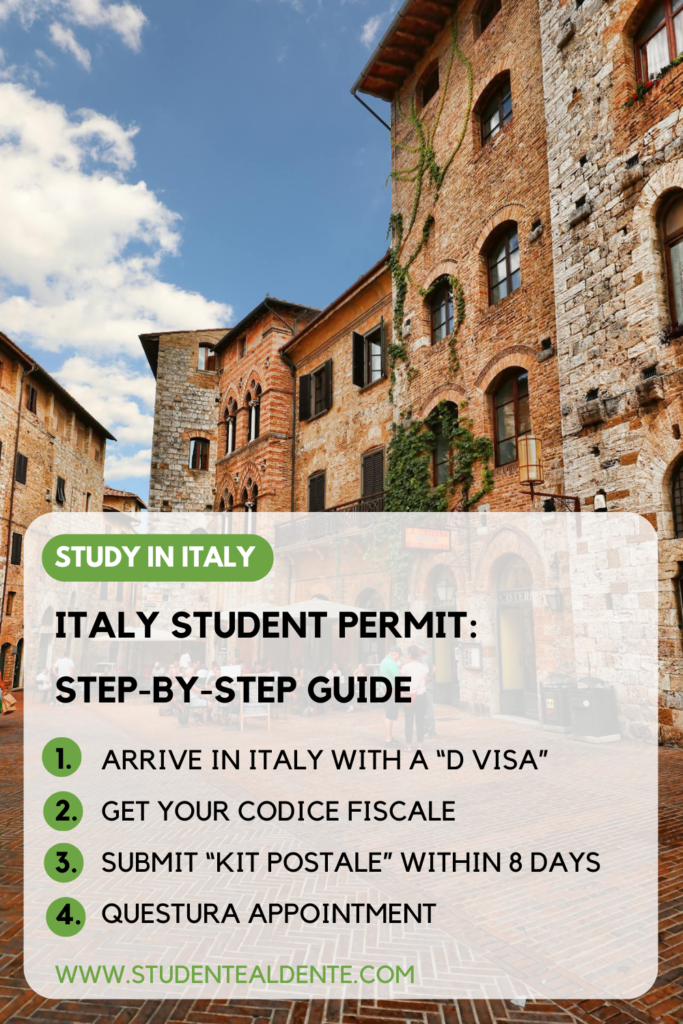
If you’re coming from outside the EU, budget extra time for everything: the Declaration of Value, the visa application at your local Italian consulate, and the permesso di soggiorno you’ll need to request within eight days of landing in Italy. None of this is impossible. It’s just slower than it looks on paper, and starting early is the only real trick.
What I’d Tell Myself in 2017
I applied to my laurea magistrale the same year I finished my triennale, in the same city, at the same university, and I still felt like I was starting from zero. New forms, new deadlines, a DSU application I had to redo from scratch even though I’d done it once already.
It worked out. Not because I had it all figured out, but because I started early and asked for help when I needed it, including from the Segreteria Studenti at UNIVPM, who answered more of my confused emails than I’d like to admit.
If you’re at the beginning of this process right now, staring at a university website in a language you’re still learning, wondering if any of this is actually going to work… it will. Slower than you’d like, with more forms than seems reasonable, but it will.
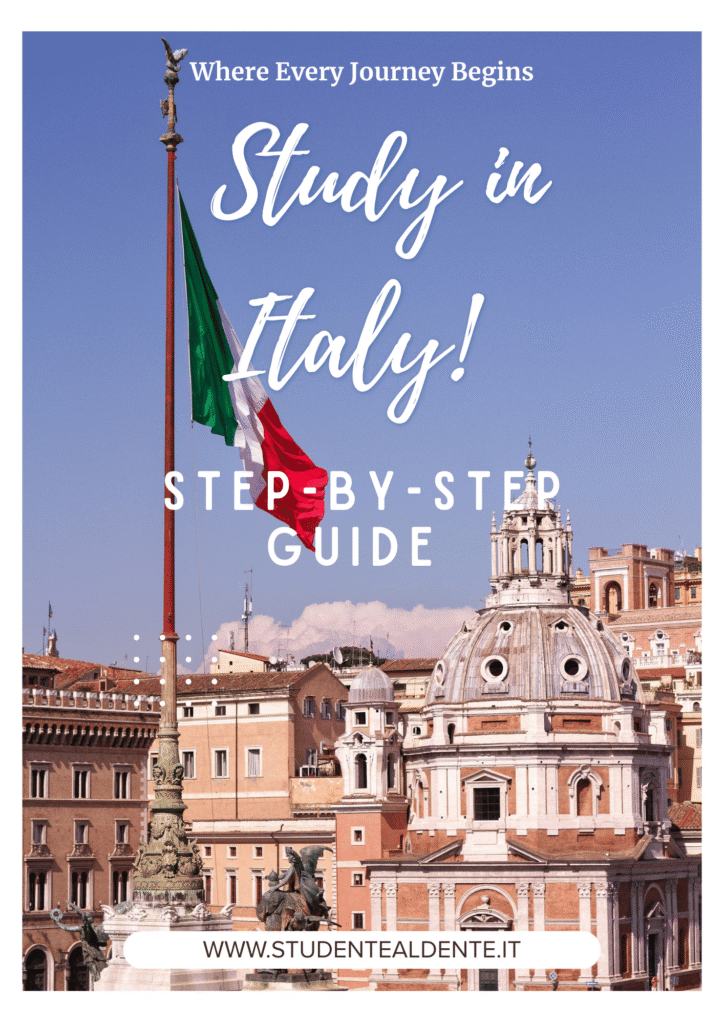
By the way, my step-by-step guide “Study in Italy” is already available on Etsy!
What’s the program you’re eyeing? Tell me in the comments; I’d love to know where this next chapter is taking you.
Ciao!