What are the limited-access and open-access faculties in Italy?
Italian universities divide their courses into two main admission types: open-entry and limited-entry. Understanding the differences between these can help you choose your path and prepare accordingly.

Open Admission Faculties:
Open admission faculties allow students to enroll without having to pass an entrance exam. These degree programs have no fixed limit on the number of students who can enroll, making admission easier. This means that anyone who meets the general admission requirements could apply and be admitted.


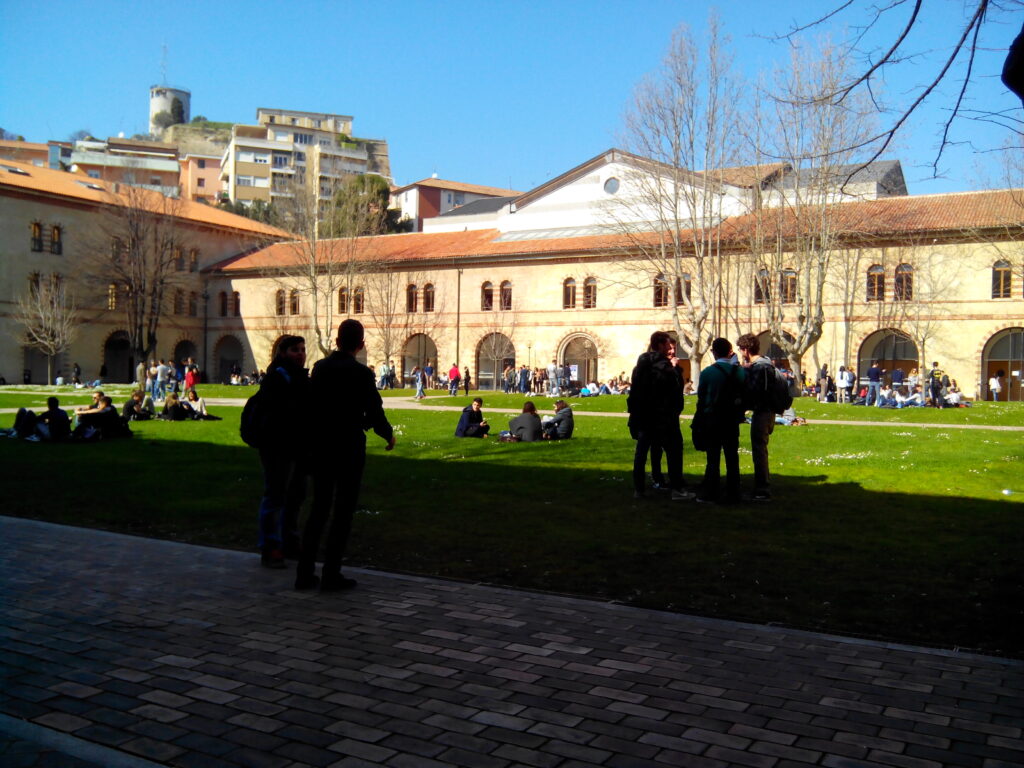
The most common open admission faculties in Italy include:
- Political Science
- Economics
- Engineering
- Law
- Humanities (Letters)
- Communication Sciences
- Education Sciences
- Tourism Sciences
- Sports Sciences
- Agriculture
These programs are ideal for students who prefer a less competitive admissions process and want to avoid the pressure of admissions tests.
Limited admission faculties:
Limited admission faculties require students to pass competitive entrance exams before being admitted. The number of available places is limited and set nationally by the Ministry of Education (MIUR) or by individual universities.

Examples of faculties with restricted admission are:
- Medicine (including English-taught Medicine courses)
- Veterinary Medicine
- Architecture
- Health Professions
- Primary Education Sciences
- Psychology
- Various Scientific Faculties
Access to these programs usually requires thorough preparation for entrance exams, as places are limited and competition is high.

Entrance exams for Italian universities are mainly divided into national (for courses such as Medicine, Dentistry, Veterinary Medicine, and Architecture) and local, administered by each university. Tests can be selective (for courses with limited places) or evaluative (for courses that only require a knowledge assessment, such as some engineering courses). Many universities use the TOLC (CISIA Online Test) for admission to various degree programs.
I invite you to read my post, which talks about the entrance test for both the limited access and open access faculties: “Your guide to university entrance exams: from limited to open-access courses”.

Special considerations for international students:
Italian universities, especially prestigious ones like the Polytechnic University of Milan, have separate quotas for international students from non-EU countries. For example, at the Polytechnic University of Milan’s Faculty of Design, only 15 places are reserved for non-EU students, with five specifically allocated for students from China (consult the Marco Polo project). The remaining places, generally between 20 and 30 per program, are shared among all other applicants.
International applicants should carefully check the number of available places and admission requirements on the official university and MIUR websites to understand their chances and the necessary preparation.

Where to check:
To find out exactly which faculties have limited admissions, in addition to referring to the individual university websites, you can consult Universitaly.it or the Studenti Stranieri Miur (studiare-in-talia.it). As for the preparation books for the entrance exams, I used the Alpha Test books.
Conclusion:
The choice between open-admission and restricted access programs in Italy depends on your academic interests, preparation, and admissions strategy. Open admission programs offer easier access and broader opportunities, while restricted admission programs focus on high-demand professional fields with competitive access. Understanding these differences can help you confidently plan your university future in Italy.